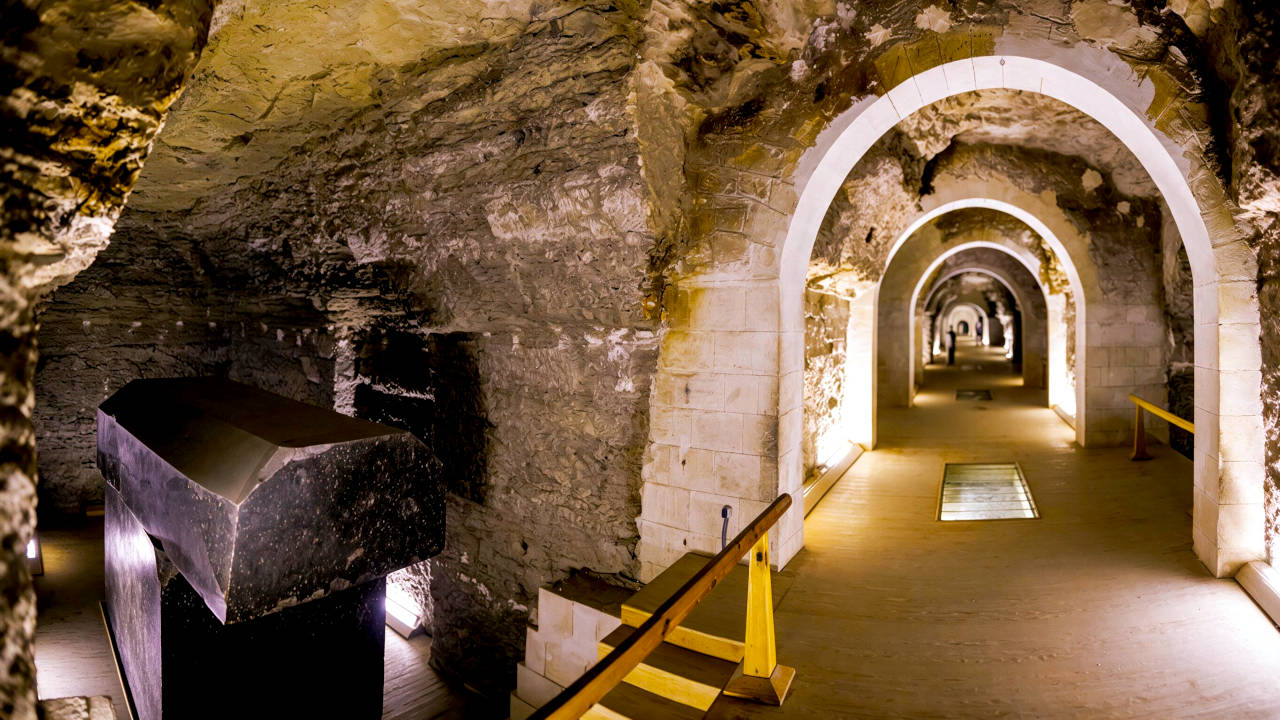
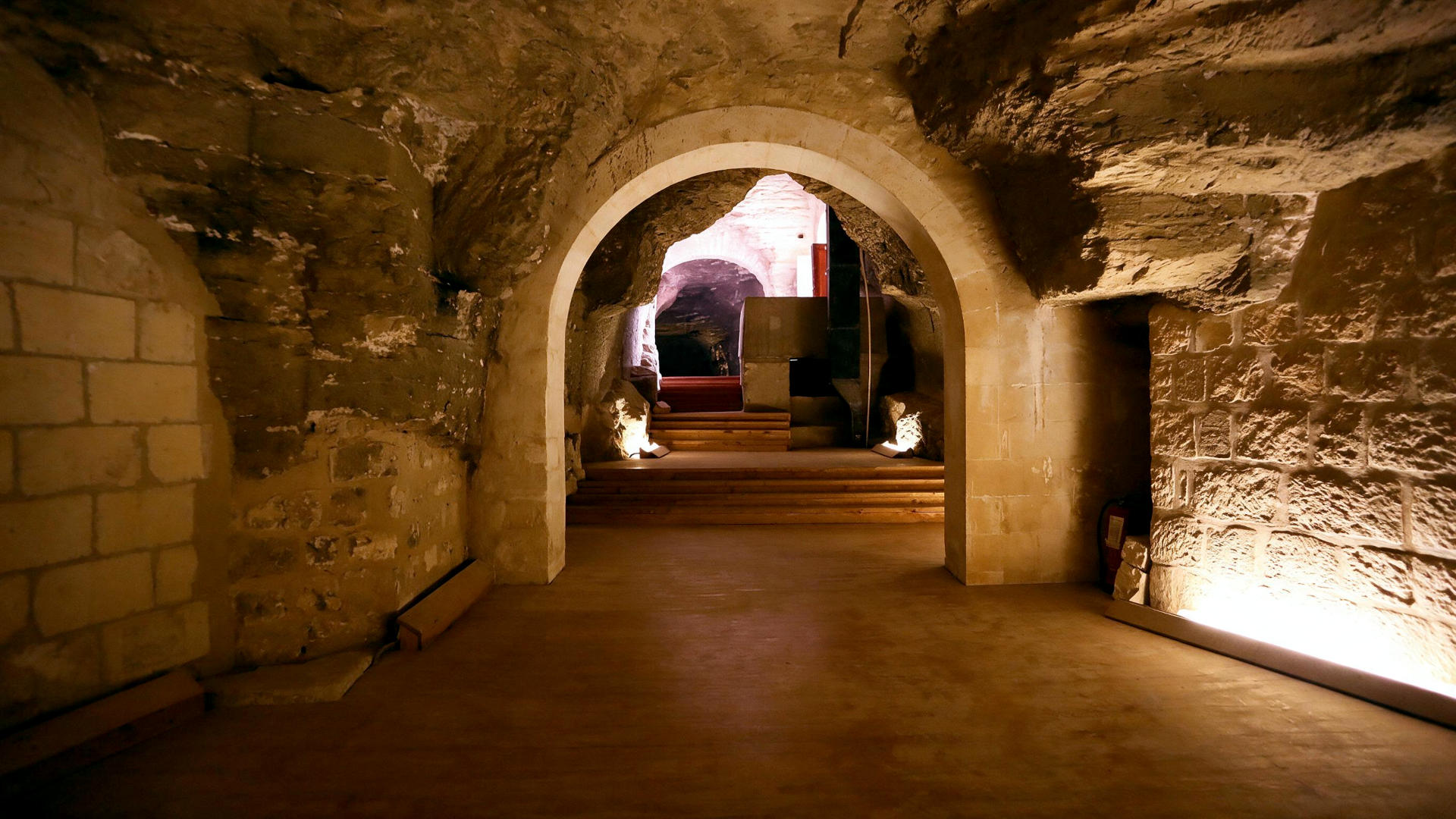
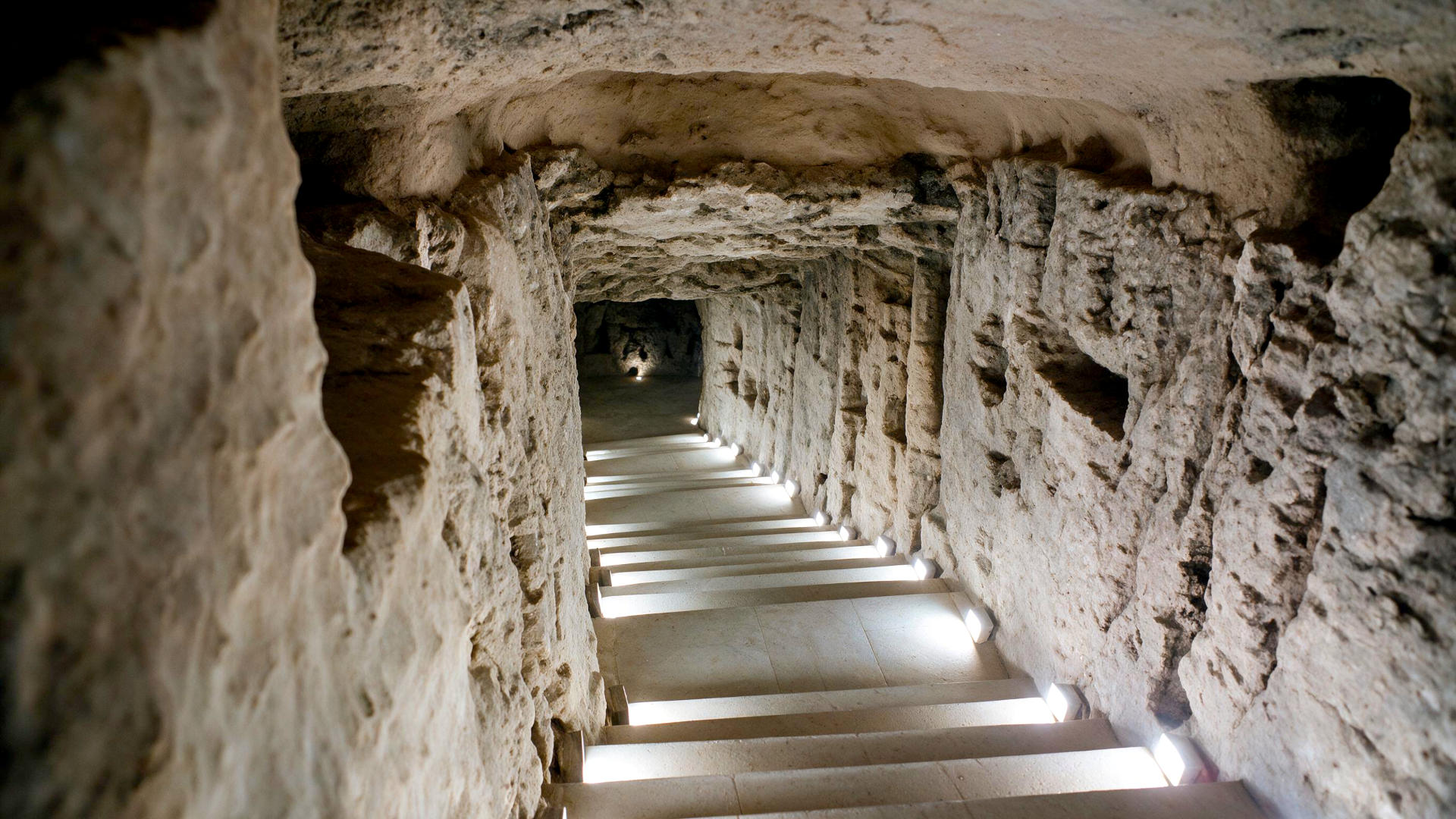
A few kilometers from the Step Pyramid of Djoser at Saqqara, deep beneath the sandy plateau, lies one of the most mysterious and least understood underground complexes of Ancient Egypt — the Serapeum.
When French archaeologist Auguste Mariette first cleared the entrance to these underground catacombs in 1850, he expected to find a traditional necropolis burial. What the explorers discovered, however, still sparks debate among historians, engineers, and Egyptologists around the world.

25 Giants of Monolithic Granite
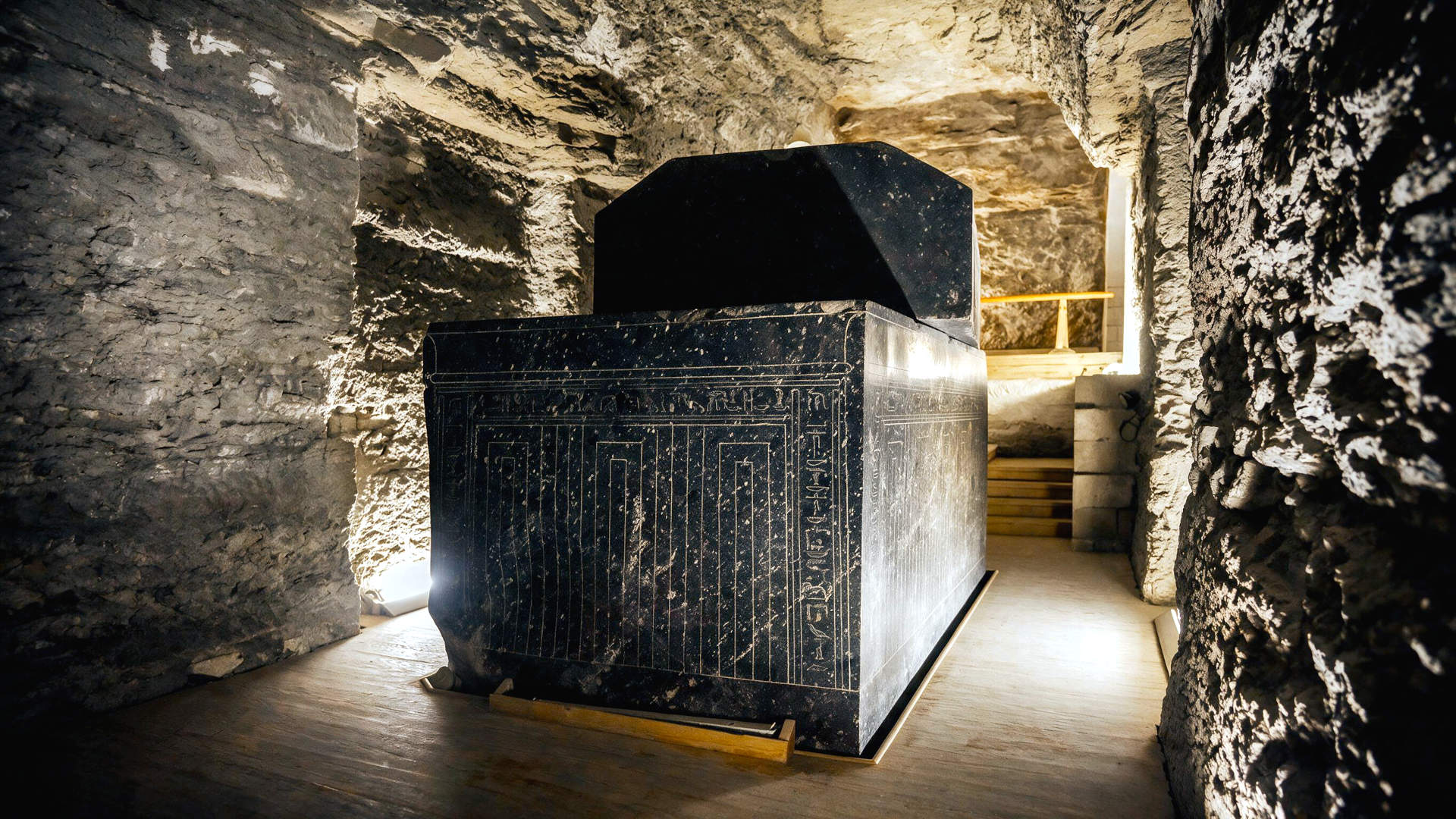
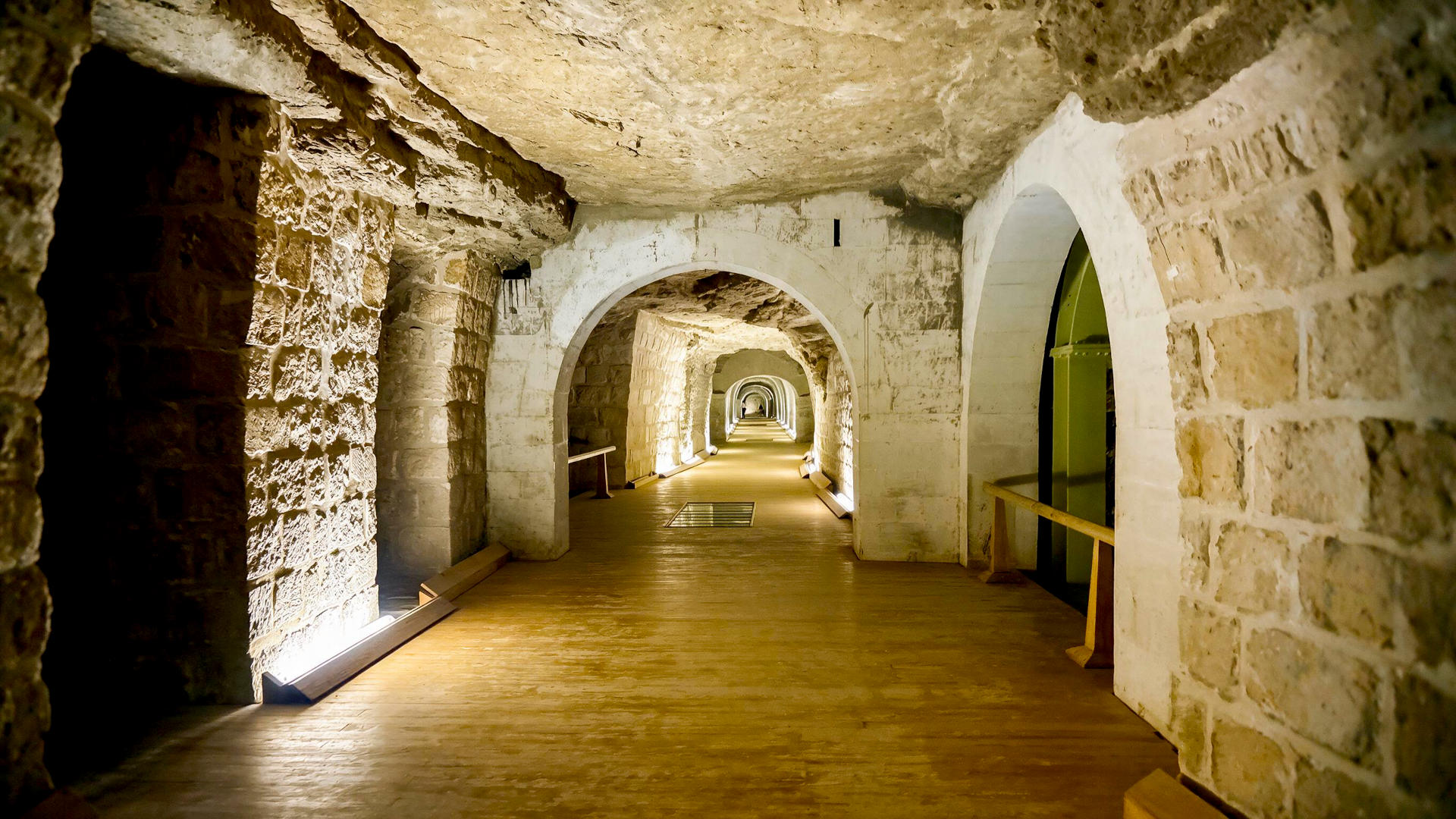
The Serapeum is a network of narrow underground corridors carved directly into the limestone bedrock. Along these corridors lie deep niches, each containing a giant sarcophagus.
The complex contains a total of 24 monolithic granite sarcophagi (plus one abandoned in a narrow corridor). Here are just a few facts that make any engineer stop and think:
- Weight: Each sarcophagus with its lid weighs between 70 and 100 tons.
- Material: High-strength Aswan granite and diorite, quarried 800 kilometers south, up the Nile.
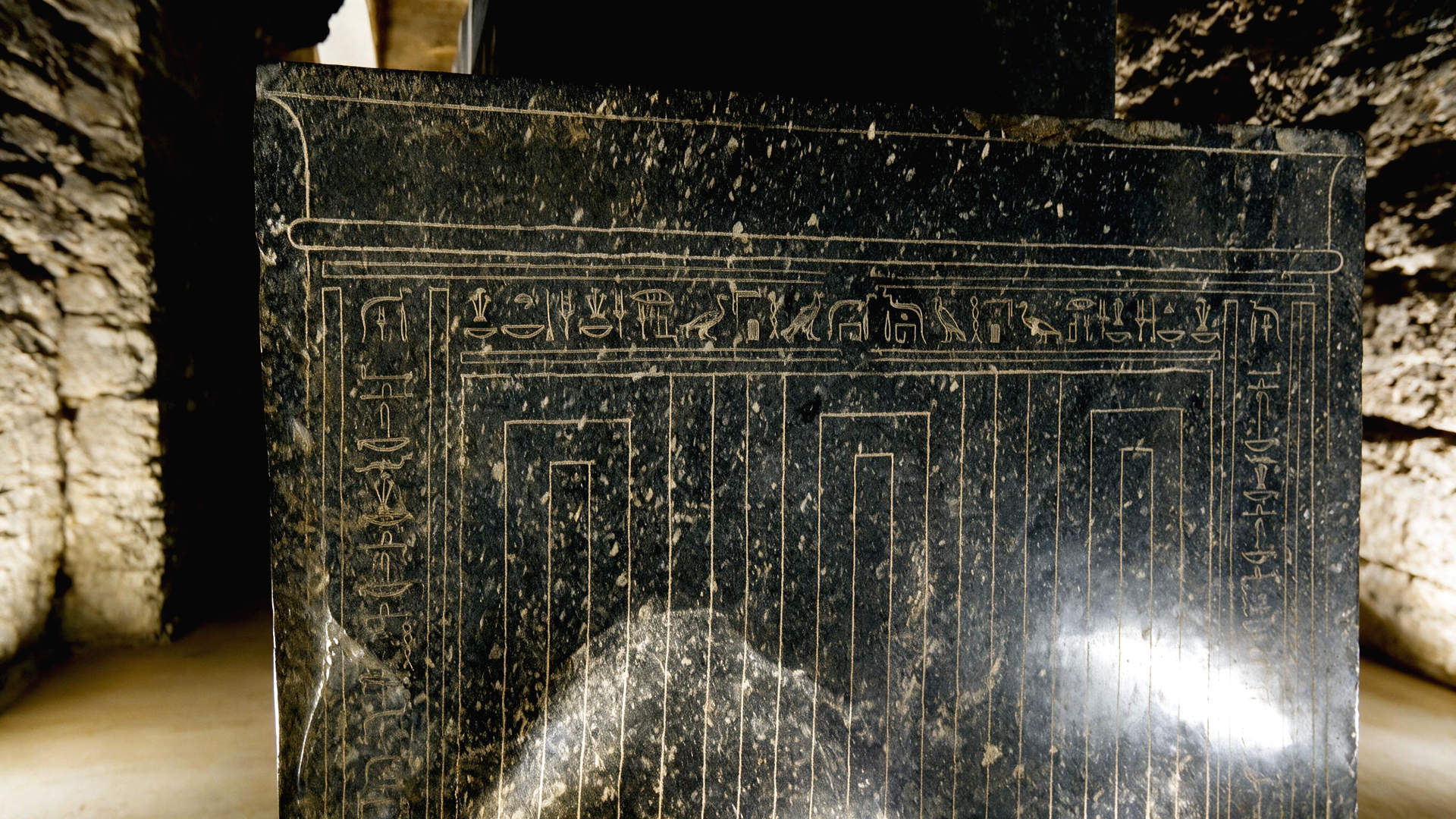
- Geometry: Inner and outer surfaces polished to a mirror finish, with angular tolerances of fractions of a millimeter.
"The main question is not why they were built, but how — under the conditions of narrow underground tunnels barely two meters wide — it was possible to bring in and perfectly install a 100-ton mass without modern equipment."
The Official Version vs. Engineers' Questions
According to traditional academic Egyptology, the Serapeum was a necropolis for the sacred Apis bulls — earthly incarnations of the god Ptah, and later Osiris. Legend has it that after a bull's death, it was mummified and buried with honors in a granite sarcophagus.
However, when Mariette used dynamite to open one of the sealed sarcophagi, it was found to be absolutely empty — there were no bull mummies, no gold, no burial artifacts, only a layer of bituminous residue.
Modern builders and engineers visiting the Serapeum note the perfect straightness of the sarcophagi's internal corners (exactly 90 degrees) — precision that today can only be achieved with high-precision CNC milling machines.