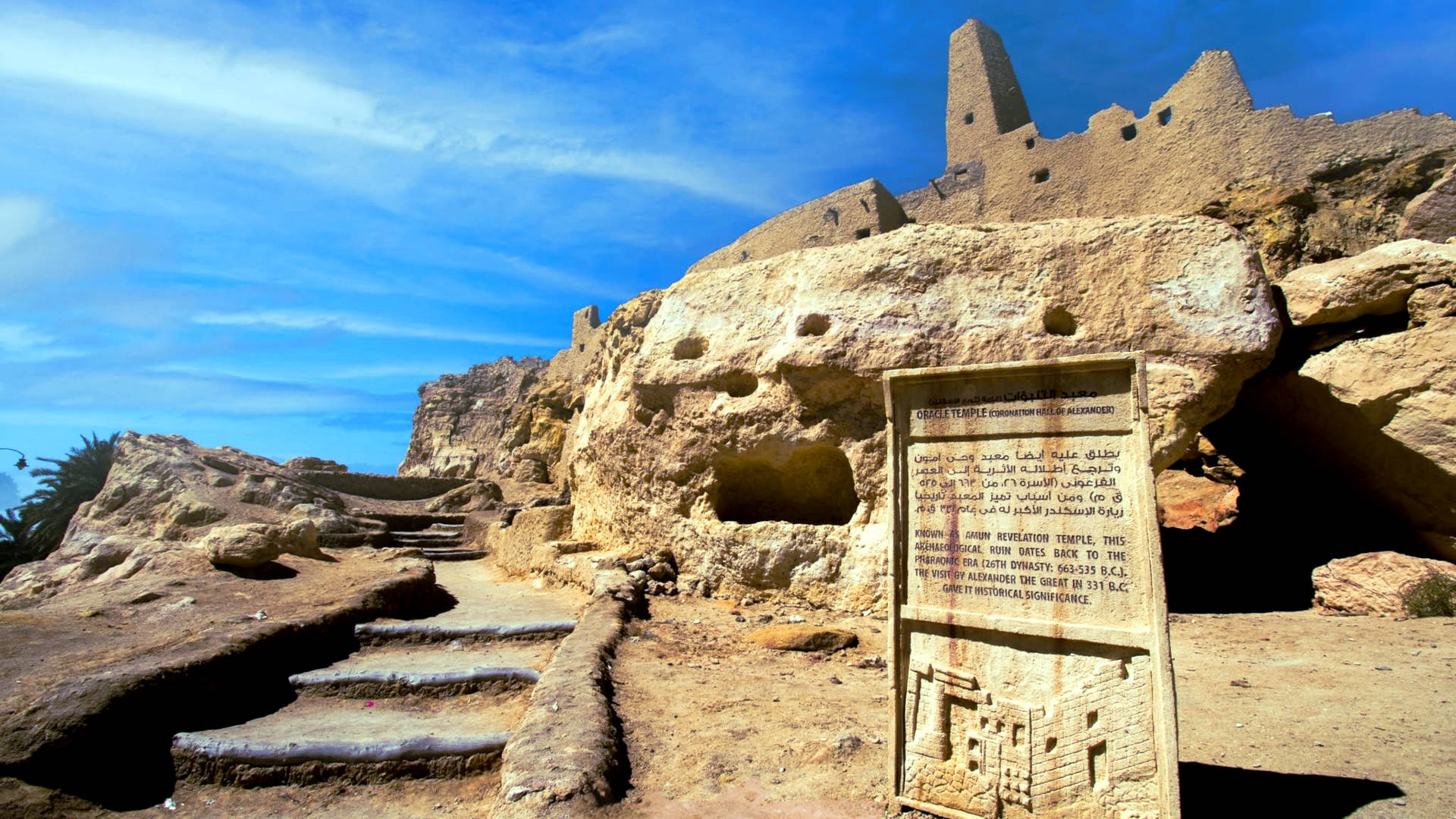
In 331 BCE, the young 25-year-old King of Macedon — already the conqueror of Egypt — was driven by one irresistible goal: to reach the lost oasis of Siwa in the desert and receive an answer from the Oracle of Amun-Ra.
This expedition held no strategic or military purpose. Alexander's army risked dying of thirst and sandstorms as they crossed hundreds of kilometers of the unforgiving Sahara. Yet Alexander pressed on relentlessly. Why?

Miracles in the Desert
Ancient historians Arrian and Plutarch describe this crossing as a chain of astonishing events that contemporaries called "divine providence":
- Life-saving rain: When the detachment ran out of water, a rare downpour fell in the parched desert.
- Raven guides: During a fierce sandstorm that threw the column off course, two ravens appeared before the commander and led the men all the way to the gates of the oasis.
"The Oracle of Siwa held the same sacred authority in the ancient world as the Oracle of Delphi did in Greece. But Siwa drew seekers not of earthly matters, but of spiritual status."
A Conversation Behind Closed Doors
When Alexander reached Aghurmi — the rock fortress where the temple stood — the priest of Amun greeted him with the words: "Greetings, my son, in the name of your father Amun."
The king then entered the cella (the inner sanctum of the temple) alone. What exactly happened inside and what words the priest spoke, Alexander revealed to no one, writing only to his mother Olympias: "I have received secret answers that I shall reveal only to you, in person."
Yet it was precisely after his visit to Siwa that Alexander fully embraced his divine origin and began wearing the symbolic horns of Amun, becoming the legendary "Iskandar Dhul-Qarnayn" (the Two-Horned) in Eastern tradition.
The Energy of the Space Today
Today, what remains of the ancient temple are stone walls and the narrow chamber of the priests, where a particular acoustics and silence can still be felt. Standing atop the rock of Aghurmi and gazing out over the endless sea of palm groves and salt lakes of Siwa, one begins to understand why the ancients sought answers precisely here.